
Building From Within: Why Urban Triage Is Training 18 Certified Peer Specialists in Madison
There's a kind of help that can't be faked.
It's the difference between someone who has read about housing instability and someone who has lived it. Between a person who was handed a pamphlet and a person who was handed a hand. When you're sitting across from someone in crisis, the most powerful thing you can offer is often four words: I've been there too.
That is the heart of peer support, and this August, Urban Triage is investing in it in a serious way.
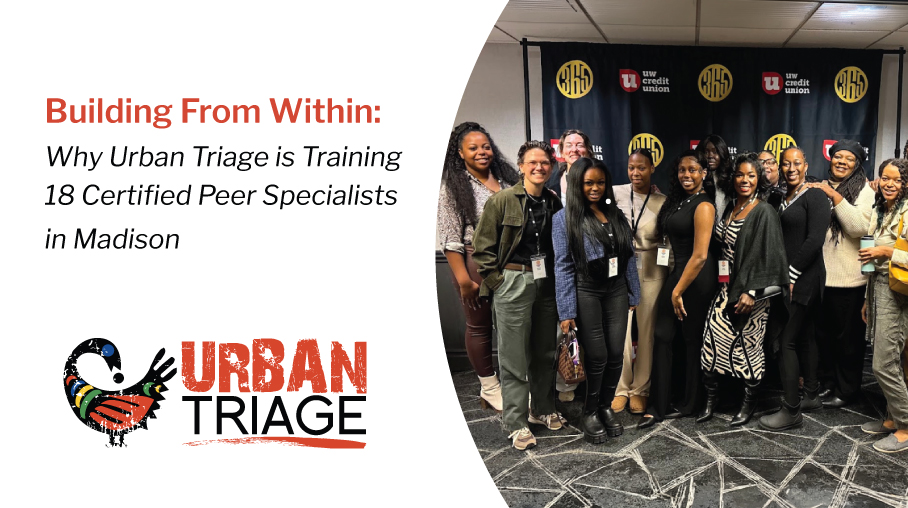
Beginning August 25, 18 Urban Triage staff members and youth residents of our transitional house will begin Wisconsin Certified Peer Specialist (CPS) Training, 10 full days over three weeks. For a community-based organization, pulling 18 people away from their daily responsibilities for that long is not a small thing. We're doing it on purpose. It reflects exactly how much this work and the people we serve across Madison and Dane County mean to us.
What is a Certified Peer Specialist?
A Certified Peer Specialist is someone who uses their own lived experience with hardship, healing, recovery, and navigating systems to support others facing similar circumstances. In Wisconsin, it's a recognized, credentialed profession within the behavioral health and community support field.
But the credential formalizes something Urban Triage has always believed: the people closest to the problem are closest to the solution.
Certified Peer Specialist training in Wisconsin turns lived experience into an additional skill. The training strengthens active listening, relationship-building, advocacy, resource navigation, and the ability to help people name and move toward their own goals. The state's own description of the role could double as a description of what Urban Triage works to create: a sense of community and belonging, supportive relationships, and valued roles.
Lived experience is expertise
Traditional systems often position the professional as the expert and the person seeking help as the problem to be managed. Peer support flips that. It treats the person as the authority on their own life.
That shift matters.
When someone feels heard rather than evaluated and supported rather than directed, something opens up that no form or referral can create on its own. A person who has survived what you're surviving doesn't look at you as a case. They look at you as kin.
One of the 18 Urban Triage team members preparing for the training explained what that investment means in her own life:
“I'm taking this peer support training not just so I can serve our current clients at Urban Triage more effectively, but so I can serve my community more effectively. This will also be my first professional certification.
Urban Triage has continuously offered us opportunities to grow personally and professionally. As someone with lived experience of mental health challenges, homelessness, and not knowing where I was going to sleep or how I was going to feed my kids and grandchildren, Urban Triage has changed my life and the legacy of my family. This certification will only strengthen that.”
That is what lived experience as expertise looks like.
It is the same truth that runs through everything we do. Freedom has an address. Independence starts with belonging. Healing, more often than not, comes through someone who stayed.
Strengthening how we serve
Urban Triage staff work every day with people navigating housing instability, homelessness, poverty, trauma, and tangled systems of care across Madison and Dane County. Those situations rarely have simple answers. Knowing which resource to recommend or which form to file matters, but it's the floor, not the ceiling.
Imagine walking through the door after already telling your story to multiple agencies. You don't know where you'll sleep. You're overwhelmed by paperwork, phone calls, eligibility requirements, appointments, and systems that expect you to keep functioning while your life is in crisis.
The person sitting across from you needs more than a resource list.
They need someone who knows how to listen and build trust. Someone who understands how trauma can shape communication and can recognize when the person in front of them needs something different than what a traditional system would hand them. CPS training gives our team more tools to meet people in those moments with skill, dignity, and humanity.
It also reinforces a principle at the core of our work: the people we serve should have a voice in what happens next. Peer-informed support doesn't make decisions for people. It works alongside them, honoring their strengths, their choices, and their own definition of what progress looks like.
That's the difference between doing something to a community and building something with one.
Building from within
Here's why we're training 18 people at once, and not one or two.
When training stays with a couple of individuals, so does the knowledge. Bring a larger group together, and it becomes part of how the whole organization operates. People develop a shared language and a common set of skills, and they can continue learning from each other long after the last session ends.
It's also an investment in leadership and opportunity.
At Urban Triage, leadership doesn't belong to a job title alone. It shows up when someone listens, advocates, solves a problem, or makes room for another person's voice. When someone earns a professional credential, that achievement belongs to them. They carry it into their work, their family, their community, and whatever comes next.
That investment extends beyond our staff. Youth residents from our transitional house are participating in the training alongside Urban Triage team members, giving them an opportunity to develop skills and pursue a professional credential they can carry into their own futures.
For one member of our team, this will be her first professional certification.
Think about what that means beyond Urban Triage. An organization invests in one person. That person gains skills and a credential that belong to her. She brings those skills home, into her community, and into whatever opportunities come next. Her children and grandchildren get to witness what is possible.
That's what we mean when we talk about building from within.
There's a bigger story here, too.
Community organizations everywhere are being asked to do more with less during a season when public funding has grown far less certain. Urban Triage's answer to that pressure isn't to shrink.
It's to get stronger.
We are investing in something that remains even when funding priorities change: our people.
For a Black-led organization like Urban Triage, building capacity from within means the knowledge doesn't disappear when a grant ends. The skills don't leave when a funding priority changes. People carry them.
Resilience isn't just surviving a hard year. Sometimes resilience is deciding that while everything around you is uncertain, you're going to put more into your people, not less.
Invest in the people doing the work
Urban Triage exists to create transformational education, psychosocial support, advocacy, housing, and economic opportunity for people who have too often been shut out of all five.
None of that happens without people.
Investing 18 people and 10 full days into Certified Peer Specialist training during a difficult funding season says something about what we believe.
We believe our people are worth investing in. We believe lived experience is expertise. And we believe strengthening a community starts with strengthening the people already inside it.
You can stand with us.
When you give to Urban Triage, you're helping us continue investing in the people doing this work and giving them more opportunities to grow, lead, and serve their communities.
Invest in the people building from within.
Your support helps Urban Triage continue creating opportunities for staff, residents, and community members to turn lived experience into leadership, skills, and lasting opportunity.
Prefer to stay close to the work? Subscribe to Urban Triage updates and follow along as our new peer specialists carry these skills back into the community.
Frequently Asked Questions
What is a Certified Peer Specialist (CPS)?
A Certified Peer Specialist is a trained, credentialed professional who draws on their own lived experience with challenges, healing, and recovery to support others facing similar situations. In Wisconsin, CPS is a recognized role within the behavioral health and community support system.
What does a peer specialist actually do?
Peer specialists use skills like active listening, relationship-building, advocacy, and resource navigation to walk alongside people. They help people feel heard, build on their strengths, and work toward their own goals rather than having decisions made for them.
How is peer support different from case management or therapy?
Peer support is built on shared lived experience and mutual connection. Rather than positioning the professional as the expert on another person's life, peer support recognizes each person as the authority on their own experiences and goals. It can complement case management and clinical care through trust, empathy, connection, and self-determination.
Why is Urban Triage training 18 staff and residents at once?
Training a larger group together turns individual knowledge into shared organizational capacity. It gives staff and residents a common set of skills, strengthens leadership throughout the organization, and embeds peer-informed practice into Urban Triage's service to Madison and Dane County.
Participants also earn a professional credential they can carry with them beyond the training and beyond Urban Triage.
Why does lived experience matter in peer support?
Lived experience can create a kind of trust and understanding that traditional service systems sometimes struggle to build. People who have navigated challenges themselves can bring perspective, empathy, and practical knowledge to supporting others while honoring each person's right to make decisions about their own life.
How can I support Urban Triage's work?
You can donate to help Urban Triage continue investing in the people doing this work, or subscribe to Urban Triage updates to follow along. Every contribution helps a Black-led, community-rooted organization build leadership and capacity from within.
Stay Connected with Urban Triage
Join our mailing list to receive the latest news, events, and exciting opportunities from Urban Triage, straight to your inbox!